
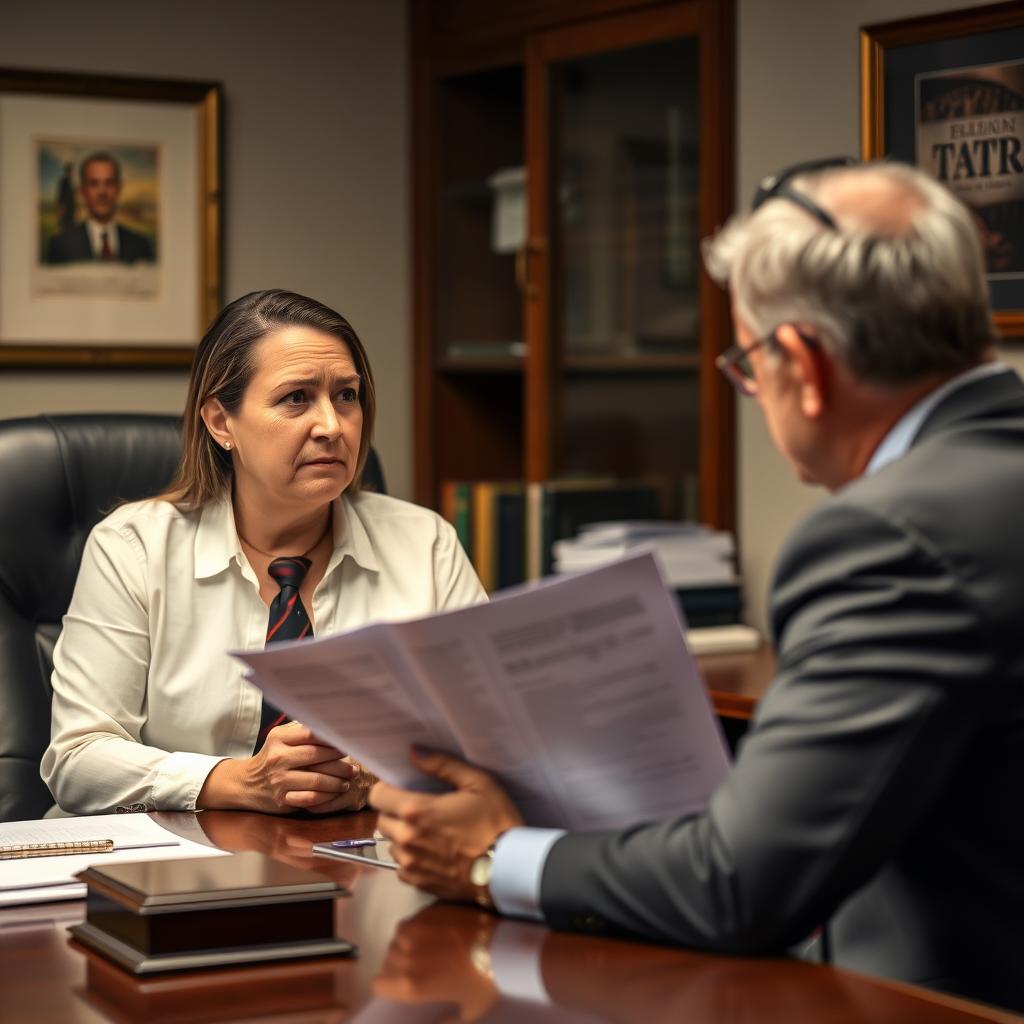
What happens at a criminal arraignment in Oneida County
If you have been arrested and charged with a crime in Oneida County, your first court appearance will be the arraignment. The arraignment is the hearing where the court formally informs you of the charges filed against you and asks you to enter a plea. The judge will also address whether you will be released pending trial and, if so, under what conditions. In Oneida County, arraignments take place in the local criminal court for misdemeanors and violation-level offenses, or in the Oneida County Court or Supreme Court Criminal Term for felony charges. New York’s 2020 bail reform eliminated cash bail for many offenses, meaning the judge will decide on release based on the specific charges and your ties to the community. Having an experienced defense attorney present at this early stage can help protect your rights and set a positive course for your case. For guidance on your situation, reach Law Offices Of SRIS, P.C. at (888) 437-7747. Law Offices Of SRIS, P.C. – Advocacy Without Borders.
What Happens When You Are Arraigned in Oneida County
When you appear for arraignment in an Oneida County court, the proceeding follows a specific order. First, the judge will read the charges and ensure you understand them. You will then be asked to enter a plea—typically guilty, not guilty, or, in some situations, no contest. If you plead not guilty, the case will be scheduled for further proceedings, such as pretrial conferences or a trial, depending on whether the charge is a misdemeanor or a felony. The assistant district attorney representing the People of the State of New York may make statements about the alleged offense and may request certain conditions of release or the setting of bail, if applicable.
The judge will also determine the terms of your release pending the next court date. Thanks to New York’s bail reform, cash bail is no longer required for most misdemeanors and non‑violent felonies. In many cases, you will be released on your own recognizance with a promise to return to court. For more serious charges, the judge may set bail or impose non‑monetary conditions such as travel restrictions or an order of protection. The arraignment also marks the formal start of your right to a speedy trial under CPL § 30.30. This is why having counsel who understands the local practices of the Oneida County courts can make a significant difference in how the early stages of your case unfold.
Frequently Asked Questions
What is a criminal arraignment in Oneida County?
An arraignment is the first court appearance after an arrest where the defendant is formally notified of the charges and asked to enter a plea. In Oneida County, this hearing takes place shortly after arrest, often within 24 hours. The judge will advise the defendant of the right to counsel, and if the defendant cannot afford an attorney, the court may assign an attorney from the public defender’s office or an 18‑b panel. The purpose of the arraignment is to begin the criminal process, not to determine guilt or innocence. It is a critical stage because the decisions made about release conditions can affect the defendant’s freedom while the case is pending.
Where does the arraignment take place in Oneida County?
The location depends on the level of the offense: misdemeanors are arraigned in the local city, town, or village court, while felonies are arraigned in the Oneida County Court or Oneida County Supreme Court Criminal Term. For example, an arrest made in Utica or Rome will typically result in an arraignment before the local city court judge. If the case is a felony, the matter will be transferred to the county‑level court after the initial appearance. The exact courtroom may be in the Oneida County Courthouse at 200 Elizabeth Street in Utica. Knowing the correct court is important because failure to appear can lead to a bench warrant.
What happens at the arraignment hearing?
The judge reads the charges, asks the defendant to enter a plea of guilty, not guilty, or no contest, and addresses the issue of release or bail. If the defendant pleads not guilty, the case is scheduled for a future court date. The prosecutor may provide a brief summary of the allegations and may make a recommendation concerning bail or release conditions. The defendant’s attorney can argue for release on recognizance or lower bail. The judge will then issue a ruling. The entire proceeding is typically short, but it sets the direction for the entire case. Defendants are advised to speak with their attorney before making any statements.
Will the judge set bail at the arraignment?
Under New York’s bail reform laws, cash bail is prohibited for most misdemeanors and non‑violent felonies, so release on recognizance is common. However, for certain violent felonies, sex offenses, and qualifying charges, the judge may still set bail. The judge will consider factors such as the seriousness of the charge, the defendant’s criminal history, ties to the community, and whether the defendant poses a flight risk. If bail is set, it can be in the form of cash, insurance company bond, or partially secured bond. An experienced defense attorney can present arguments to support a release without bail.
Can I be released without bail?
Yes, most defendants charged with non‑violent offenses in Oneida County are released on their own recognizance—a simple promise to return to court—without having to pay any money. New York’s Criminal Procedure Law favors release unless the court finds that the defendant is a flight risk or a danger to the community. Even for some felony charges, the judge may release the defendant under supervision or with specific conditions, such as electronic monitoring or a curfew. The availability of release without bail is a critical factor to discuss with your attorney at the arraignment.
What should I do before the arraignment?
Before the arraignment, you should contact an experienced criminal defense attorney immediately and refrain from discussing your case with anyone other than your lawyer. Gather any paperwork you received at the time of arrest, including the appearance ticket or desk appearance ticket if you were not held in custody. It is also important to inform your attorney of any ties to the community—such as employment, family, or residence—that can be used to argue for release on recognizance. Avoid posting about the incident on social media, as anything you say can be used against you.
Do I need a lawyer at the arraignment?
You have the right to an attorney at every stage of a criminal proceeding, including the arraignment, and it is strongly recommended that you have one. If you cannot afford a lawyer, the court will assign counsel at the arraignment. However, having a private attorney who is familiar with the local courts, prosecutors, and judges in Oneida County can provide a strategic advantage. Your lawyer can argue for a favorable release decision, challenge procedural errors, and begin building your defense from the very first hearing. Law Offices Of SRIS, P.C. represents clients at arraignments in Oneida County.
What if I miss my arraignment?
Missing an arraignment is a serious matter and will almost certainly result in a bench warrant being issued for your arrest. Once a warrant is issued, law enforcement has the authority to take you into custody at any time, and your release conditions may be revoked. If you miss the arraignment for a legitimate reason—such as a medical emergency—your attorney may be able to move the court to vacate the warrant and reschedule the date. However, the court has broad discretion, and failing to appear can negatively affect your case. To avoid complications, never skip a scheduled court date.
Can the charges be dropped at the arraignment?
It is possible but uncommon for charges to be dropped at the arraignment stage, as the prosecutor generally proceeds on the complaint filed by law enforcement. A dismissal at this early stage would typically arise from a legal defect in the complaint itself—such as an insufficient factual allegation—that the defense attorney identifies and raises to the court. In some cases, the district attorney may decide not to prosecute if the evidence is clearly lacking. For most defendants, however, the arraignment is the start of a longer defense process, and fighting the charges effectively requires the work that follows the arraignment.
What comes after the arraignment?
After the arraignment, the case proceeds to the next scheduled court date, which may be a pretrial conference, a hearing, or trial preparation, depending on the charge. For misdemeanors, the court will set a date for further proceedings, typically within a few weeks. For felonies, the case is likely to be adjourned for a grand jury investigation, and the defense may file motions to dismiss or suppress evidence. Your attorney will continue to gather evidence, interview witnesses, and negotiate with the district attorney’s office. Staying proactive and following your attorney’s advice throughout this process is essential.
How can Law Offices Of SRIS, P.C. help at the arraignment?
Mr. Sris and his Of Counsel team appear at arraignments in Oneida County to advocate for release conditions that protect your freedom and ensure your rights are respected from the start. Although the firm is based in multiple jurisdictions, its New York location serves clients throughout the state, including Oneida County. The team’s familiarity with New York criminal procedure, combined with Mr. Sris’s background as a former prosecutor, allows for informed arguments at this critical stage. To discuss your case before the arraignment, call (888) 437-7747 to reach a member of the firm.
About Mr. Sris and His Of Counsel Team
Mr. Sris, Owner and Founder of Law Offices Of SRIS, P.C., has been practicing law since 1997. A former prosecutor, he brings unique insight into how the prosecution builds its case. Mr. Sris and his Of Counsel bring extensive combined legal experience. Results may vary. The firm’s New York location serves clients in Oneida County and across the state, handling criminal defense matters including arraignments, bail hearings, and trial representation. If you are facing criminal charges, reach the firm at (888) 437-7747 to discuss your situation.
Sibling pages:
New York County Criminal Defense Lawyer |
Kings County Criminal Defense Lawyer |
Queens County Criminal Defense Lawyer |
Nassau County Criminal Defense Lawyer
Attorney advertising. Prior results do not guarantee a similar outcome. Case results depend on a variety of factors unique to each case. Results may vary.