
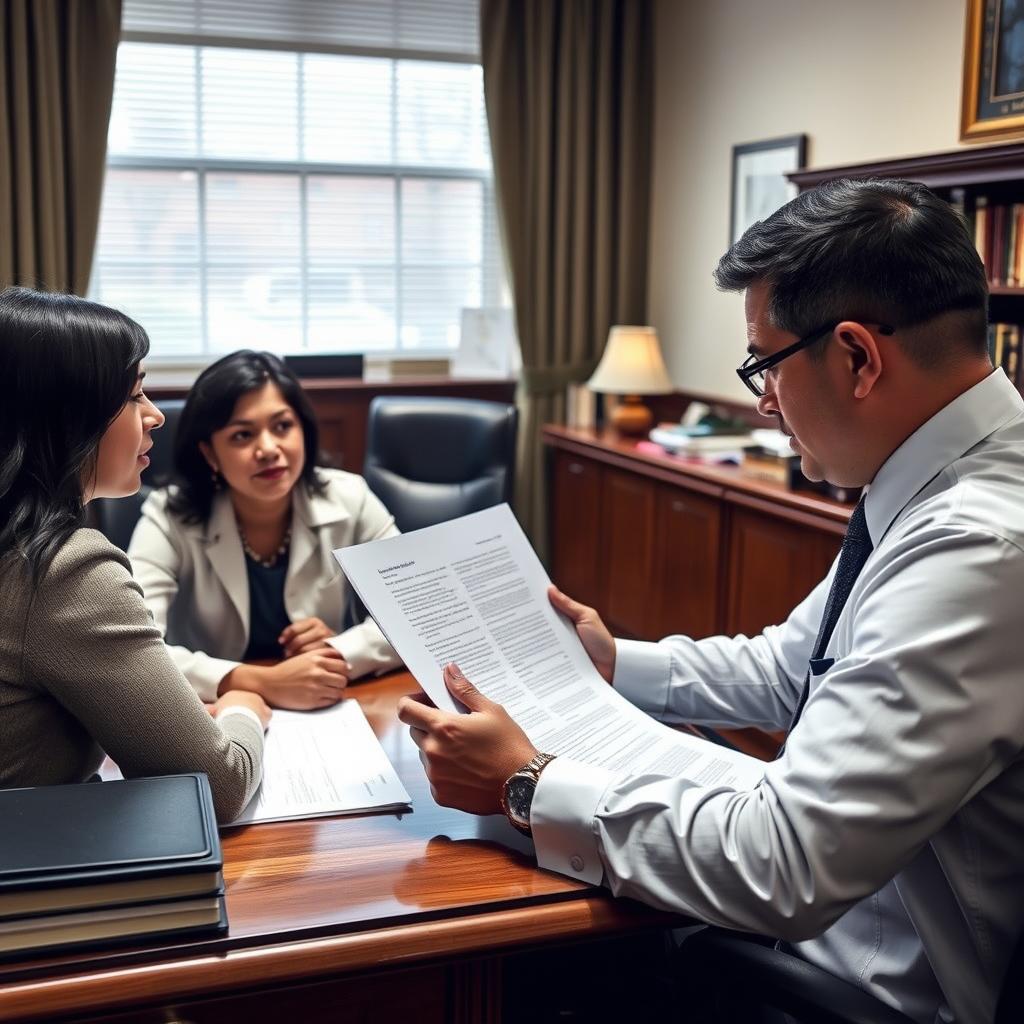
What happens at a criminal arraignment in Forest Hills
A criminal arraignment in Forest Hills, D.C., is the formal first court appearance after an arrest, held at the D.C. Superior Court Criminal Division at 500 Indiana Ave NW. At this hearing, the judge reads the charges against you, advises you of your rights, and asks you to enter a plea—not guilty, guilty, or no contest. The arraignment also addresses whether you will be released pending trial. In the District of Columbia, the court relies on the Pretrial Services Agency (PSA) to assess your risk and recommend release conditions; traditional cash bail is not used for most offenses. Having an experienced criminal defense attorney at this stage can help protect your rights and advocate for favorable release terms. Law Offices Of SRIS, P.C. represents individuals facing criminal charges in Forest Hills and throughout the Washington, D.C. Region. Call (888) 437-7747 to request a consultation. Law Offices Of SRIS, P.C. – Advocacy Without Borders.
Understanding the Arraignment Process in Forest Hills, D.C.
In Forest Hills and all neighborhoods of the District of Columbia, the arraignment process is governed by the rules of the D.C. Superior Court. When you are arrested, you typically first appear before a judge for a presentment, where you are informed of the charges. In misdemeanor cases, the formal arraignment occurs within approximately 24 hours of arrest. For felony charges, the initial presentment may happen quickly, but a full arraignment does not take place until after a grand jury returns an indictment, a process that can take several months depending on the complexity of the matter.
At the arraignment, the judge will read the charges aloud and explain the potential penalties. You will be asked to enter a plea. If you plead not guilty, the case proceeds to a status hearing or trial date. If you plead guilty or no contest, the judge will examine the voluntariness of your plea and, if accepted, proceed to sentencing. The arraignment is also the point at which the Pretrial Services Agency presents its release recommendation. Under the District’s pretrial system, most defendants are released on personal recognizance or with conditions such as check‑ins, drug testing, or stay‑away orders; cash bail is reserved for only the most serious cases. The Public Defender Service for DC (PDS) is available for those who cannot afford private counsel, but having your own attorney gives you the opportunity to actively participate in the release‑condition discussion and start building a defense strategy immediately.
Frequently Asked Questions About Arraignments in Forest Hills, D.C.
What is a criminal arraignment?
A criminal arraignment is your first court appearance after an arrest, where the judge formally reads the charges against you and you enter a plea. At this hearing, you are also advised of your right to counsel and the range of possible penalties. The judge will determine whether you will be released while the case is pending, often relying on a recommendation from the Pretrial Services Agency. The arraignment sets the schedule for future court dates and ensures you understand the legal process you are facing. Having an attorney present at this stage helps protect your rights and present information relevant to your release.
What happens if I miss my arraignment in D.C.?
If you fail to appear at your arraignment, the judge will likely issue a bench warrant for your arrest. Missing a court date in the District of Columbia can lead to additional charges, such as contempt of court or bail jumping, and may result in the revocation of any pretrial release. Even if you have a valid reason for your absence, it is critical to contact your attorney immediately so they can inform the court and possibly have the warrant recalled. Prompt action can help minimize the consequences and avoid being taken into custody unexpectedly.
Can the charges be dismissed at the arraignment?
It is very rare for charges to be dismissed at the first arraignment, as the hearing is primarily procedural. The prosecution has usually just filed the charging document, and the court’s focus is on reading the charges, taking your plea, and addressing release conditions. However, an attorney can raise immediate legal issues, such as a deficient charging document or violations of your right to a speedy presentment, which in limited cases could result in a dismissal or correction of the charges. More often, the defense will seek to challenge the charges through later motion practice.
Do I need a lawyer at the arraignment?
You are strongly encouraged to have a lawyer present at your arraignment, although you are not legally required to have one. If you cannot afford an attorney, the Public Defender Service for DC (PDS) may be appointed to represent you. However, a private attorney can begin working on your case immediately, addressing release conditions and preserving evidence. Law Offices Of SRIS, P.C. represents clients at D.C. Superior Court and can appear at your arraignment to protect your interests. Contact (888) 437-7747 to request a consultation.
How does DC’s pretrial release system work at arraignment?
At arraignment, the District of Columbia uses a risk‑based pretrial release system rather than a cash‑bail model for most offenses. The Pretrial Services Agency (PSA) interviews you before the hearing and prepares a report for the judge that assesses your risk of flight and danger to the community. Based on that assessment, the judge may release you on personal recognizance, impose conditions such as regular check‑ins or drug testing, or, in the most serious cases, order you held without bond. Your attorney can present arguments and evidence to support the least restrictive release conditions appropriate to your situation.
What is the difference between a misdemeanor and a felony arraignment?
Misdemeanor arraignments in D.C. Typically occur within a day of arrest, while felony arraignments happen only after a grand jury indictment. For a misdemeanor, you will hear the charges and enter a plea soon after your arrest. For a felony, the initial court appearance addresses release conditions, but the formal arraignment—where you plead—is scheduled after the grand jury has reviewed the evidence and issued an indictment, which can take weeks or months. The felony process is longer and involves more procedural steps, making experienced counsel especially critical from the outset.
Can I plead not guilty at the arraignment?
Yes, you have the right to plead not guilty at your arraignment, preserving your ability to contest the charges. A not-guilty plea does not indicate guilt or innocence; it simply means you are putting the government to its burden of proof. After entering a not-guilty plea, the judge will set a status hearing or trial date. Your attorney will then have the opportunity to review the evidence, file motions, and negotiate with the prosecutor. In many cases, the true defense work begins after the arraignment, and a not-guilty plea is standard practice to allow that work to unfold.
What if I cannot afford a private lawyer?
If you cannot afford a private attorney, you may qualify for representation by the Public Defender Service for DC (PDS), the court‑appointed defense agency. PDS attorneys are experienced criminal defense lawyers who handle a high volume of cases. While they provide competent representation, you may also choose to hire private counsel who can dedicate more time to your matter and work directly on your release conditions before the arraignment. A private attorney can start investigating immediately and may have greater flexibility to address your specific needs.
How long does an arraignment take?
An arraignment itself is usually brief, often lasting only a few minutes per case. The actual hearing involves the judge reading the charges, advising you of your rights, taking your plea, and setting release conditions and future dates. However, you may need to wait in the courtroom or holding area for your case to be called, which can take several hours depending on the court’s docket. Your attorney can provide guidance on what to expect and help you navigate the waiting period. For a consultation, reach Law Offices Of SRIS, P.C. at (888) 437-7747.
What happens after the arraignment?
After the arraignment, your case moves to the next scheduled court date, which could be a status hearing, a pretrial conference, or a trial date. Your attorney will receive discovery from the prosecutor, investigate the facts, and identify defenses. In the weeks or months that follow, you and your attorney will work together to prepare your case, which may include negotiating a plea offer or filing motions to suppress evidence. The timeline varies by the complexity of the case and the court’s calendar. For guidance on your specific situation, reach Law Offices Of SRIS, P.C. at (888) 437-7747.
About Mr. Sris and His Of Counsel Team
Mr. Sris, Owner and Founder of Law Offices Of SRIS, P.C., is a former prosecutor who founded the firm in 1997. He and his Of Counsel team bring over 120 years of combined legal experience and have achieved 4,739+ documented firm-wide results in criminal defense matters. Results may vary. Mr. Sris is admitted in Virginia, Maryland, the District of Columbia, New Jersey, and New York. The firm represents individuals at D.C. Superior Court and throughout the Washington, D.C. Area, handling misdemeanors, felonies, and complex criminal charges. If you are facing a criminal arraignment in Forest Hills or anywhere in the District, contact the firm at (888) 437-7747 to request a consultation.
Related Pages
Related: Washington, D.C. Criminal defense lawyer | Georgetown criminal lawyer | Chevy Chase DC criminal lawyer | Cleveland Park criminal defense | Spring Valley criminal lawyer
Attorney advertising. Prior results do not guarantee a similar outcome.
Case results depend on a variety of factors unique to each case.
Attorney advertising. Prior results do not guarantee a similar outcome.