
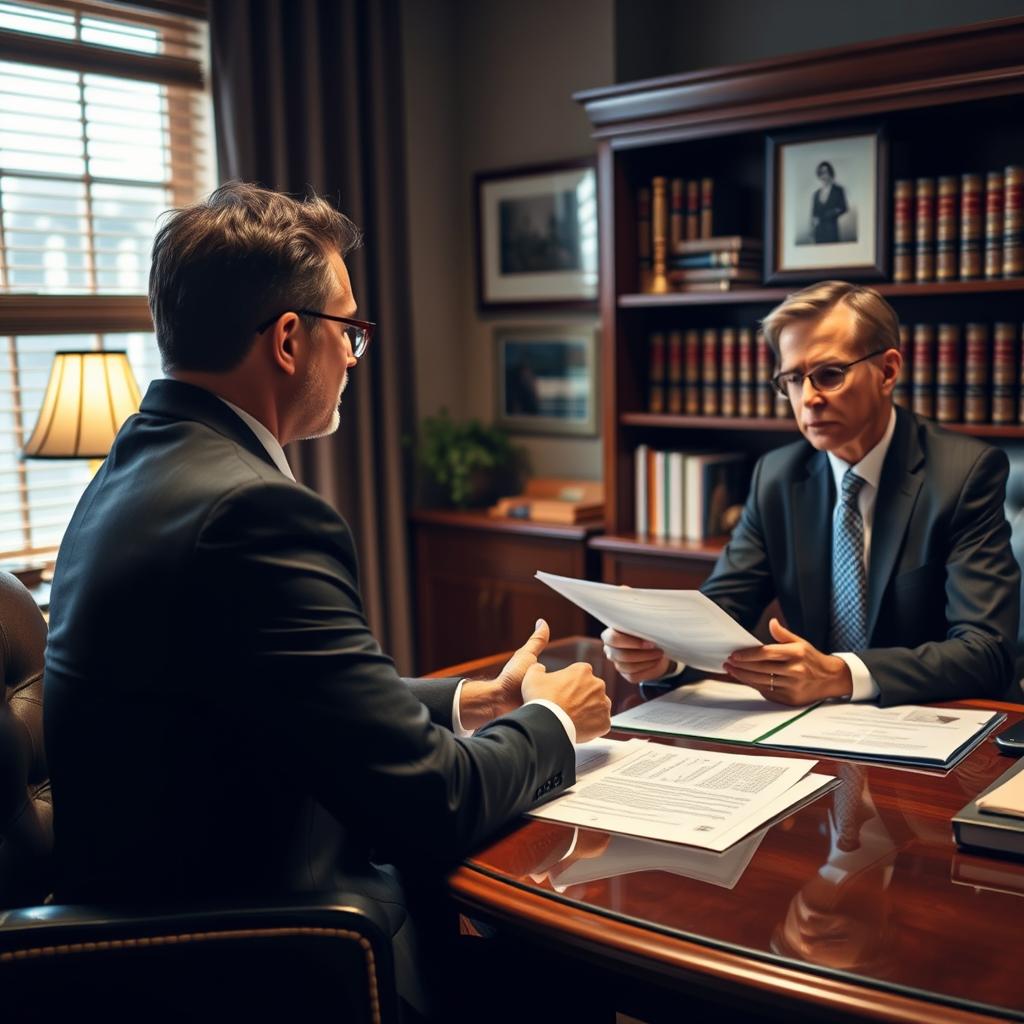
What are my Miranda rights in District of Columbia
Your Miranda rights are the same in the District of Columbia as anywhere else in the United States: you have the right to remain silent, the right to know that anything you say can be used against you in court, the right to have an attorney present during questioning, and the right to have an attorney appointed if you cannot afford one. These warnings stem from the U.S. Supreme Court’s decision in Miranda v. Arizona and must be given whenever law enforcement subjects a person to custodial interrogation—meaning the person is in custody and is being questioned. In Washington, D.C., the Metropolitan Police Department (MPD) and other law enforcement agencies are required to observe these requirements. If an officer fails to provide a proper Miranda warning before a custodial interrogation, any statement you make may be excluded from evidence at trial. Law Offices Of SRIS, P.C., concentrates its criminal defense practice on protecting clients’ constitutional rights at every stage of a DC criminal case. Mr. Sris, a former prosecutor, and his Of Counsel team have extensive experience evaluating whether a Miranda violation occurred and how to challenge improperly obtained statements. To discuss your situation, request a consultation at (888) 437-7747. Law Offices Of SRIS, P.C. – Advocacy Without Borders.
Understanding Your Miranda Rights in the District of Columbia
The Miranda warning in Washington, D.C., covers four core protections: (1) the right to remain silent; (2) the explanation that any statement you make can and will be used against you in court; (3) the right to consult with an attorney before and during any questioning; and (4) the right to have an attorney appointed at no cost if you cannot afford one. These are not mere formalities—they are constitutionally rooted safeguards that limit the government’s ability to extract incriminating statements through custodial pressure. The U.S. Attorney’s Office for the District of Columbia prosecutes all serious local criminal offenses, and the U.S. Attorney reviews whether Miranda was properly administered as part of its case evaluation. If a court determines that a Miranda violation occurred, the prosecution may be barred from using the defendant’s statements in its case-in-chief. Law Offices Of SRIS, P.C., concentrates on criminal defense in DC Superior Court and federal court, and Mr. Sris and his Of Counsel carefully analyze the circumstances of a client’s arrest and questioning to identify whether a constitutional violation may provide grounds to suppress evidence.
Frequently Asked Questions
What exactly are Miranda rights?
Miranda rights are the constitutional safeguards that require police to inform a person in custody of their right to remain silent and their right to an attorney before any interrogation. They derive from the Fifth Amendment privilege against self-incrimination and the Sixth Amendment right to counsel. The familiar warning tells a suspect that anything they say can be used against them in court, that they have the right to a lawyer, and that a lawyer will be provided if they cannot afford one. If an individual clearly invokes either the right to silence or the right to counsel, officers must generally stop questioning until those rights are honored.
When must police read Miranda rights in the District of Columbia?
Police in Washington, D.C., must administer Miranda warnings before conducting a custodial interrogation—when a person is both in custody and being questioned about a crime. Custody means a reasonable person would not feel free to leave. Routine traffic stops, voluntary police encounters, or questions asked before an arrest typically do not require Miranda warnings. The key is the combination of custody and interrogation. If you are handcuffed and placed in a patrol car, and then asked incriminating questions without having been Mirandized, any resulting statements may be challenged in a motion to suppress.
What if I was arrested but not read my Miranda rights in DC?
An arrest without Miranda warnings does not automatically invalidate the arrest itself, but any statements you made while in custody and under interrogation may be excluded from evidence. Miranda protects statements, not the arrest. If the police had probable cause to arrest you, the arrest remains valid even if they failed to Mirandize you. However, a criminal defense lawyer can file a motion to suppress the unwarned statements. If the court grants the motion, the prosecution cannot use those statements to build its case. The arrest may still proceed based on other evidence, but a Miranda violation can significantly weaken the government’s position.
Can my case be dismissed if the police didn’t read me my rights?
It is uncommon for an entire criminal case to be dismissed solely because of a Miranda violation. Dismissal typically occurs only if the suppressed statements were the only evidence supporting the charges. More often, the remedy is the exclusion of the unwarned statements at trial. Without those admissions, the prosecution may be unable to meet its burden of proof. A thorough review by an experienced criminal defense attorney can determine whether the remaining evidence is sufficient and whether dismissal is a realistic possibility.
Do Miranda rights apply if I am not in custody?
No—Miranda warnings are only required when a person is both in custody and subject to interrogation. If you are speaking with police voluntarily and are free to leave, any statements you make can generally be used against you even without a Miranda warning. Officers often conduct “voluntary” interviews at a person’s home or on the street to avoid triggering Miranda. Understanding when you are in custody can be complex; an attorney can evaluate whether the circumstances of your encounter amounted to a de facto arrest requiring Miranda protection.
How should I invoke my Miranda rights during a DC police stop?
You should clearly and unequivocally state: “I am invoking my right to remain silent” or “I want a lawyer.” Simply remaining silent is not always enough to stop questioning—officers may continue until you explicitly invoke your rights. If you request an attorney, all questioning must cease until a lawyer is present. Invoking your rights cannot be used against you as evidence of guilt. After you invoke, do not re-initiate conversation with the police without counsel present, as that can be seen as a waiver of your previously invoked rights.
What happens if I waive my Miranda rights?
If you voluntarily, knowingly, and intelligently waive your rights—verbally or in writing—police may continue questioning and any statements you make can be used against you. A waiver must be clear. Courts examine whether the waiver was given freely, without threats or coercion, and whether the suspect understood the rights they were giving up. If you later regret waiving your rights, that does not undo the waiver. An attorney can challenge the validity of a waiver if it was not truly voluntary or if the officer continued questioning after an ambiguous invocation.
Is it better to answer questions or stay silent after an arrest in DC?
It is almost always advisable to remain silent and request an attorney before answering police questions. Even if you believe you can explain your way out of the situation, anything you say can be misconstrued, taken out of context, or used to build a case against you. Police are trained interrogators, and statements made without counsel present can have serious consequences. Politely but firmly stating that you wish to remain silent and want a lawyer is the safest course. A criminal defense lawyer can later advise you on what, if anything, to say.
I was questioned by a detective at the station without a lawyer—was that legal?
If you were in custody, the detective was required to read you Miranda rights and you must have waived them before questioning could proceed. If you were at the station voluntarily and free to leave, Miranda may not have applied. However, once you are not free to leave, custody attaches. If the detective questioned you without providing Miranda warnings while you were in custody, your statements may be subject to suppression. A thorough evaluation by a criminal defense lawyer will determine whether a constitutional violation occurred.
Do juveniles have different Miranda protections in DC?
Yes—courts apply a higher standard when evaluating whether a juvenile’s waiver of Miranda rights was voluntary and knowing. Because of a minor’s age, experience, and capacity to understand legal rights, DC courts may scrutinize the circumstances more carefully. Police are still required to give the same Miranda warnings, but if a juvenile is questioned without a parent or guardian present, the court may find the waiver invalid. An attorney experienced in juvenile defense can argue that a juvenile’s statements should be excluded if the waiver was not truly voluntary.
Why should I contact a criminal defense lawyer after an arrest in DC?
An attorney can immediately assess whether your rights were violated, advise you on what to say (or not say), and begin building a defense. The period immediately after an arrest is critical. A lawyer can examine the arrest report, determine whether Miranda was properly administered, and file a suppression motion if police obtained statements unlawfully. Early legal intervention often leads to better outcomes. For a consultation, reach Mr. Sris and his Of Counsel at (888) 437-7747.
How does Law Offices Of SRIS, P.C. help with Miranda violation issues?
Mr. Sris, a former prosecutor, and his Of Counsel team examine every detail of the arrest and interrogation to determine whether a Miranda violation occurred and seek to suppress any resulting statements. Because the firm concentrates its practice on criminal defense in DC, Virginia, and Maryland, its lawyers understand how local prosecutors and judges handle Miranda challenges. If a violation is identified, the firm prepares a motion to suppress and argues for the exclusion of the evidence. Even if the statements are not suppressed, the violation can sometimes be used in negotiation or at trial to undermine the prosecution’s case. To discuss your matter, request a consultation at (888) 437-7747.
About Mr. Sris and His Of Counsel Team
Law Offices Of SRIS, P.C. was founded in 1997 by Mr. Sris, a former prosecutor who concentrates on criminal defense. Mr. Sris is admitted in Virginia, Maryland, the District of Columbia, New Jersey, and New York, and he brings extensive experience to DC criminal matters. He testified before the Virginia House Courts of Justice Committee in support of 2019 HB 635 (chief patron Del. David Bulova). Mr. Sris and his Of Counsel team bring over 120 years of combined legal experience with 4,739+ documented firm-wide results. Results may vary. The firm serves District of Columbia clients from its Arlington location by appointment. Reach the firm at (888) 437-7747 to schedule a consultation.
Attorney advertising. Prior results do not guarantee a similar outcome.
Case results depend on a variety of factors unique to each case.