
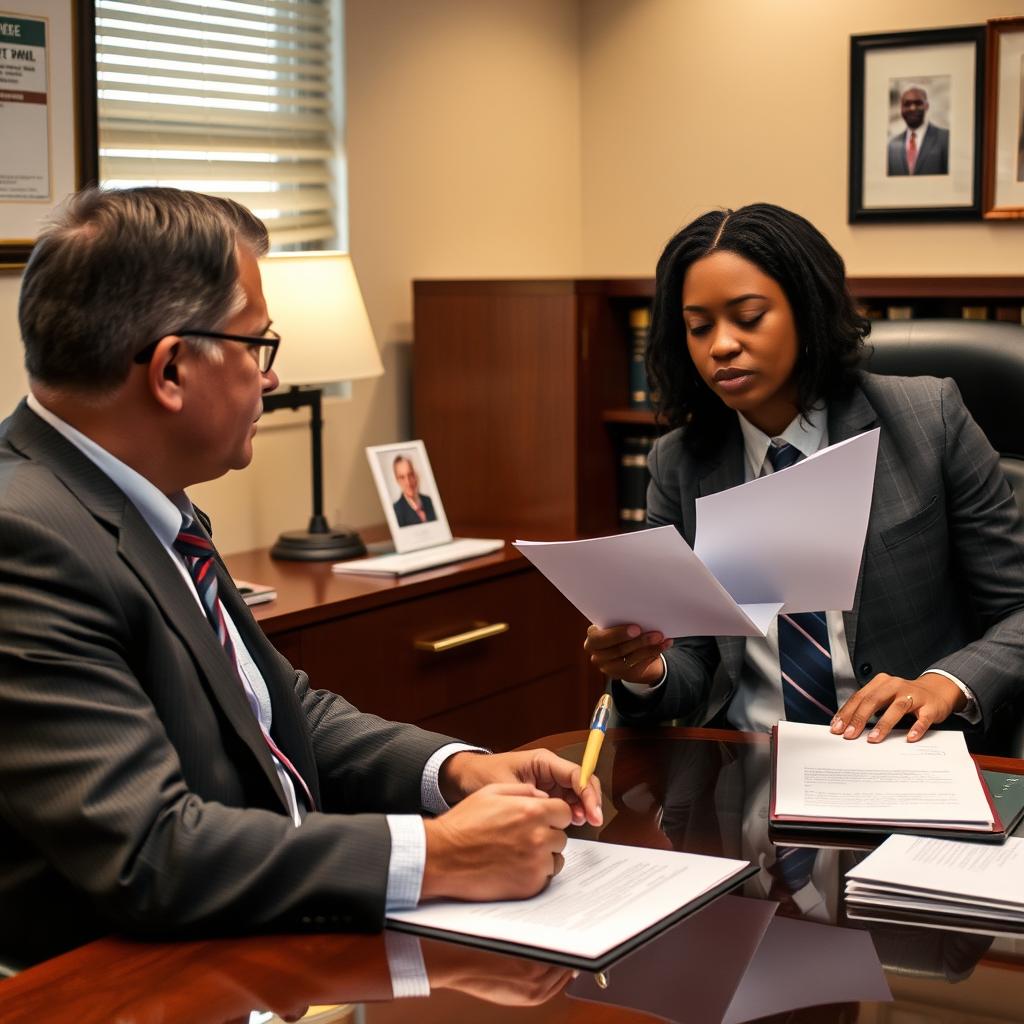
What happens at a criminal arraignment in Anacostia
If you or someone you care about has been arrested in Anacostia, the first court date you will face is an arraignment — a brief hearing before a judge at the D.C. Superior Court Criminal Division. The arraignment is not a trial. It is the proceeding where the court formally tells you the charges, confirms your identity, and asks you to enter a plea. In Washington, D.C., arraignments typically happen shortly after arrest, often within one business day for misdemeanors. Understanding what to expect can help you prepare and, importantly, can guide your decision about whether to have an experienced criminal defense attorney present. For cases originating in the Anacostia neighborhood and throughout Southeast D.C., the firm’s attorneys regularly appear at 500 Indiana Avenue NW, just off the Metro’s Red Line. If you have a pending arraignment, reach Law Offices Of SRIS, P.C. at (888) 437-7747 to discuss your situation. Law Offices Of SRIS, P.C. – Advocacy Without Borders.
What a Criminal Arraignment Means in Anacostia
Anacostia is a vibrant, historic community east of the Anacostia River, and criminal matters arising here are handled exclusively by the D.C. Superior Court, located at 500 Indiana Avenue NW in the Judiciary Square area. Because Washington, D.C. Is a unique federal district, local criminal prosecutions are brought by the United States Attorney’s Office for the District of Columbia — not by a district attorney — under the D.C. Criminal Code. The court’s Criminal Division processes all arrests, whether they involve a minor misdemeanor or a serious felony. When a person is taken into custody by the Metropolitan Police Department (MPD) anywhere in Anacostia — for an offense reported near Martin Luther King Jr. Avenue, Good Hope Road, or the Anacostia Metro station — the case is routed to Superior Court, and an initial appearance or arraignment is set promptly.
The term “arraignment” has a specific meaning under D.C. Law: it is the hearing at which the judge reads the charges, ensures the defendant understands them, and accepts a plea of not guilty, guilty, or, in limited circumstances, nolo contendere. For misdemeanor charges, this often occurs the next business day following an arrest. For felony charges, an initial appearance may happen quickly, but a formal arraignment usually occurs after the U.S. Attorney’s Office files a charging document called an information, or after a grand jury returns an indictment. Mr. Sris and his Of Counsel are familiar with both schedules and can advise you on which timeline applies to your case.
The Arraignment Process at D.C. Superior Court, Criminal Division
On the day of arraignment, you will go through security at the courthouse and proceed to the assigned courtroom. An MPD officer or a U.S. Marshal may escort you if you are in custody. The judge will confirm your name and address, inform you of the charges, and explain your rights — including the right to remain silent, the right to an attorney, and the right to a trial. You will then be asked to enter a plea. In the vast majority of cases, a plea of not guilty is entered, preserving all defenses and giving your lawyer time to review the evidence, negotiate with the prosecutor, and file motions.
Release conditions are a central part of the arraignment in D.C. Unlike many states, the District does not rely on a commercial cash bail system. Instead, the D.C. Pretrial Services Agency (PSA) — a federal agency — conducts a risk assessment and makes a recommendation to the judge about whether you should be released pending trial, and under what conditions. The court may release you on personal recognizance, impose a supervised release order with check-ins, or order you to stay away from certain locations or individuals. In some felony cases where there is a substantial flight risk or community safety concern, pretrial detention is possible, and your lawyer can argue for your release. Having an attorney who understands the PSA process and how to present mitigating information is critical at this stage. From our Arlington location, Mr. Sris and his Of Counsel regularly appear at the D.C. Superior Court and are prepared to advocate for the most favorable release terms.
How an Attorney Helps at Arraignment
An arraignment may seem routine, but what happens there can shape the entire case. An experienced lawyer can ensure that you do not inadvertently say something harmful, can request a copy of the charging document and initial discovery, and can bring to the court’s attention facts that support your release — such as community ties, employment, family responsibilities, and lack of prior record. The lawyer can also begin discussing the case with the Assistant United States Attorney assigned to the matter, exploring whether an early resolution or a diversion program might be available. Because the U.S. Attorney’s Office for D.C. Prosecutes under a unique hybrid of local and federal authority, having counsel who is comfortable navigating both D.C. Superior Court procedure and federal charging practices is a real advantage.
Mr. Sris, a former prosecutor who founded the firm in 1997, and his Of Counsel team bring over 120 years of combined legal experience with 4,739+ documented firm-wide results. Results may vary. They have handled criminal matters across Virginia, Maryland, and the District of Columbia and understand how an arraignment can impact bail, future plea negotiations, and trial preparation. While every case is different, having a lawyer present at the earliest stage helps avoid procedural pitfalls and sets a professional tone for the proceedings.
About Mr. Sris and His Of Counsel Team
Mr. Sris is the Owner and Founder of Law Offices Of SRIS, P.C.; he is admitted to practice in Virginia, Maryland, the District of Columbia, New Jersey, and New York and has concentrated his practice on criminal defense since 1997. Mr. Sris testified before the Virginia House Courts of Justice Committee in support of 2019 HB 635 (chief patron Del. David Bulova). He is supported by Of Counsel attorneys who have extensive experience in D.C. Criminal law and who regularly appear at the Superior Court. The firm’s attorneys work collaboratively, ensuring that each client’s arraignment is handled with careful attention to the local procedures of the D.C. Court system.
Frequently Asked Questions
What exactly happens at an arraignment in D.C.?
At an arraignment, the judge reads the charges against you, confirms your identity, informs you of your rights, and asks you to enter a plea. You will typically plead not guilty to allow your lawyer time to investigate the case and negotiate. The judge will also address your release status, setting conditions based on the Pretrial Services Agency’s risk assessment. If you are in custody, the court may schedule a further hearing, such as a status conference or a preliminary hearing for felony cases.
How soon after an arrest does arraignment happen in Anacostia?
For a misdemeanor arrest in Anacostia, you are generally brought before a judge within 24 hours, often the next business day. Felony cases may have an initial appearance soon after arrest, with a formal arraignment scheduled after an indictment or information is filed, which can take several weeks. The court’s calendar and the nature of the charge affect exact timing.
Do I need a lawyer at my arraignment in D.C. Superior Court?
You are not required to have a lawyer at arraignment, but it is strongly advisable because a lawyer can advocate for your release, preserve your rights, and begin building your defense immediately. If you cannot afford an attorney, the court will appoint the Public Defender Service for the District of Columbia (PDS). However, a private attorney can provide more individual case review from the very first hearing and work with you throughout the entire case, beginning at arraignment.
Can I be released from custody at my arraignment?
Yes, the judge decides release conditions at the arraignment based on the risk assessment prepared by the D.C. Pretrial Services Agency. D.C. Does not use a commercial cash bail system. You may be released on personal recognizance, on supervised release, or ordered to comply with specific conditions such as stay‑away orders or drug testing. In some felony cases, the court may order detention pending trial, and your lawyer can argue for release.
What should I bring to my arraignment hearing?
Bring a government‑issued photo ID, your copy of the charging document or citation if you have one, and contact information for any lawyer you may have retained. Dress appropriately for court — clean, conservative attire. Do not bring weapons, large bags, or electronics that may violate courthouse security rules. If you are represented by counsel, your attorney will provide you with specific instructions before the hearing.
What happens if I plead not guilty at arraignment?
Entering a not‑guilty plea triggers the next steps in your criminal case — usually a status hearing or, for felonies, a preliminary hearing or grand jury presentation. The U.S. Attorney’s Office will begin to disclose evidence, and your lawyer will have the opportunity to file motions, negotiate with the prosecutor, and investigate the facts. A not‑guilty plea does not mean you cannot resolve the case later; it simply preserves all your rights and options as the case proceeds.
How does the D.C. Superior Court schedule arraignments for cases from Anacostia?
Cases originating in Anacostia are calendared in the same way as any other D.C. Arrest; the court schedules arraignments based on the date and time of arrest, with in‑custody defendants appearing first. The court’s daily docket at 500 Indiana Avenue NW includes defendants from all wards. Your lawyer can confirm the courtroom and time, and can often file an entry of appearance to receive electronic notifications about future court dates.
Where is the D.C. Superior Court located, and how do I get there from Anacostia?
The court is at 500 Indiana Avenue NW, Washington, D.C. 20001, next to the Judiciary Square Metro station on the Red Line. From Anacostia, you can take the Metro’s Green Line to Gallery Place‑Chinatown and transfer to the Red Line one stop to Judiciary Square, or travel by car via the Frederick Douglass Memorial Bridge and South Capitol Street. Our Arlington location is at that distance from the courthouse, and our attorneys are familiar with the area.
For additional questions about your arraignment, reach Law Offices Of SRIS, P.C. at (888) 437-7747 to request a consultation.
Attorney advertising. Prior results do not guarantee a similar outcome. Case results depend on a variety of factors unique to each case. Results may vary.
Served from Arlington, Virginia: 1655 Fort Myer Dr, Suite 700, Room 719, Arlington, VA 22209 | (888) 437-7747