
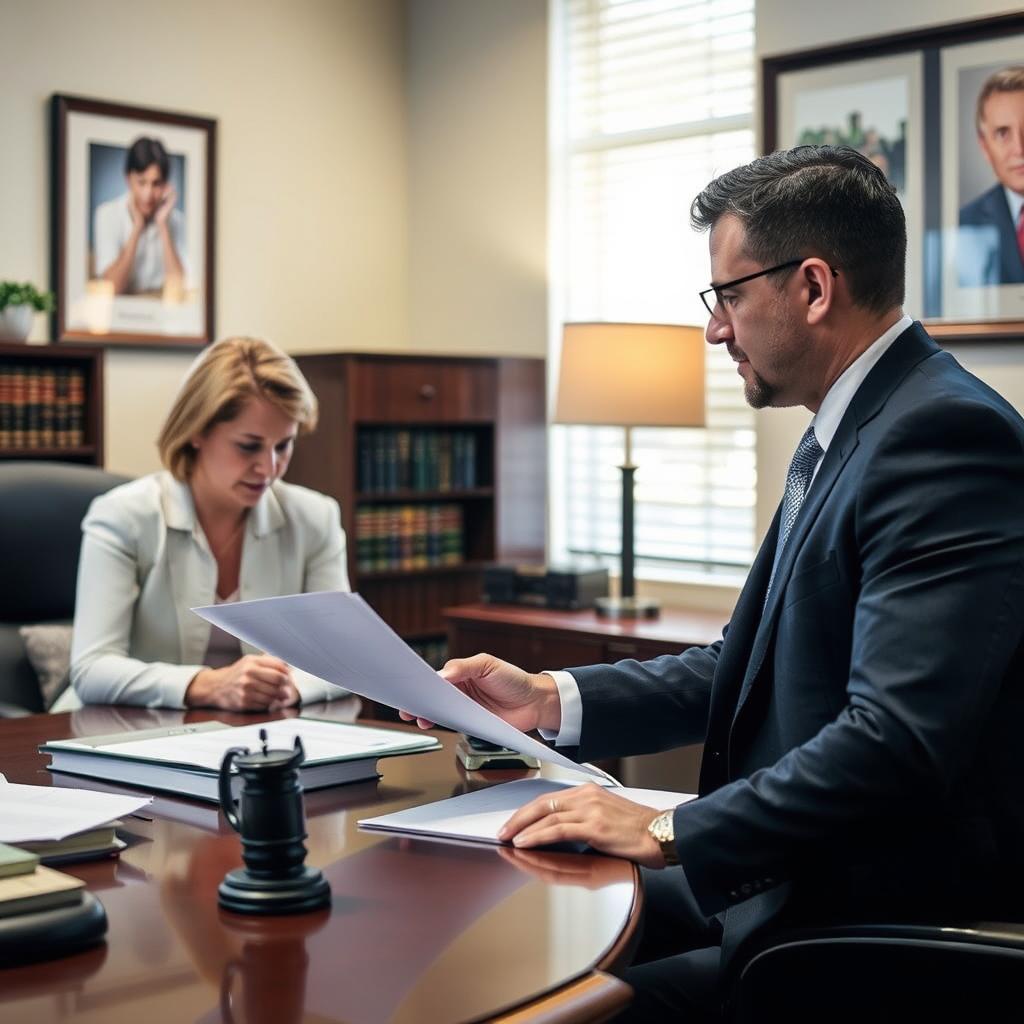
How long does a criminal case take in Southwest Waterfront
There is no single answer to how long a criminal case takes in Southwest Waterfront, because every case turns on its own facts, the charges filed, and the decisions made at each stage. A misdemeanor resolved by plea may conclude in weeks; a contested felony with pretrial motions can extend beyond a year. The court’s calendar, the complexity of the evidence, and whether the U.S. Attorney’s Office extends an offer all influence the timeline. If you have been charged or are under investigation, your immediate step should be to speak with an attorney who can assess your situation and explain what to expect. For a confidential consultation, reach Law Offices Of SRIS, P.C. at (888) 437-7747. Law Offices Of SRIS, P.C. – Advocacy Without Borders.
Direct Answer: What Determines the Timeline in Southwest Waterfront
The Southwest Waterfront is part of Washington, D.C., and all criminal cases originating in this neighborhood are handled at the D.C. Superior Court, located at 500 Indiana Avenue NW. That court operates under a hybrid federal-local framework: local crimes are prosecuted by the United States Attorney’s Office for the District of Columbia, and release decisions are made by the Pretrial Services Agency rather than by a cash-bail system.
For a misdemeanor charge—such as simple assault, petit larceny, or disorderly conduct—the initial appearance and arraignment often occur within a day or two of arrest. If the case does not resolve at an early status hearing, a trial date is usually set within a few months. Felony matters follow a longer path. The government must present evidence to a grand jury, and if an indictment is returned, the case moves to the felony calendaring track. Pretrial motion practice, discovery review, and potential competency evaluations (conducted at St. Elizabeths Hospital when needed) can each add time. A felony trial may be scheduled six to twelve months after the initial charge, or longer when the case is factually complex or involves forensic evidence.
Several provisions protect the right to a timely proceeding. The Speedy Trial Act and the Sixth Amendment impose limits, but defendants may waive time for strategic reasons. An experienced defense lawyer can advise on whether a faster resolution or a more deliberate pace serves your interests. The timeline is not just a function of the court’s schedule—it is a tool that counsel can apply with purposeful decision-making.
Frequently Asked Questions
Does DC have cash bail?
No, the District of Columbia does not use cash bail. Instead, the Pretrial Services Agency, a federal agency, assesses the risk that a defendant will fail to appear or pose a danger if released. It then recommends release conditions—such as supervised release, stay-away orders, or drug testing—to the court. Most defendants are released without posting money while their case is pending. This system applies to arrests throughout the Southwest Waterfront, just as it does in every other DC neighborhood.
How does a criminal case begin in Southwest Waterfront?
A case usually starts with an arrest by the Metropolitan Police Department or with the filing of a charging document by the U.S. Attorney’s Office. After arrest, the person is brought before a magistrate judge for a presentment, where the court reviews the charge and the Pretrial Services Agency’s release recommendation. The court then sets conditions of release and schedules a status hearing. If the government seeks an indictment, the matter goes to a grand jury, and the defendant is later arraigned in the felony branch of D.C. Superior Court.
What factors most affect how long a criminal case takes in Southwest Waterfront?
The severity of the charge, the amount of evidence to review, and whether the case goes to trial are the biggest drivers. Misdemeanors generally resolve faster than felonies. Cases that involve forensic analysis—such as DNA, digital evidence, or firearm examinations—take longer because the defense and prosecution both need time to review laboratory reports. The availability of witnesses and the court’s trial calendar also affect scheduling. An attorney who actively engages in discovery and motion practice can shape the pace of the case to the client’s advantage.
Can a case be resolved without a trial?
Yes, the large majority of criminal cases in D.C. Superior Court are resolved through plea agreements or dismissals. Under Virginia (Rule 3A:8) and analogous federal practice, the parties may negotiate a resolution that the court can accept or reject. In many Southwest Waterfront cases, the U.S. Attorney’s Office may agree to dismiss certain counts, reduce a charge, or recommend a particular sentence. An attorney can evaluate the strength of the government’s evidence and help you decide whether a negotiated outcome is in your best interest.
What is the role of the U.S. Attorney’s Office in Southwest Waterfront criminal cases?
The U.S. Attorney’s Office for the District of Columbia prosecutes all local criminal offenses, from minor misdemeanors to serious felonies, under the D.C. Code. This is unique to the District: there is no district attorney elected by the city. The office decides what charges to bring, whether to offer a plea, and what sentencing recommendation to make. Understanding how federal prosecutors approach cases in D.C. Superior Court is a key part of mounting an effective defense.
Does Southwest Waterfront have its own courthouse?
No, there is no neighborhood courthouse in Southwest Waterfront. All criminal cases from every DC neighborhood, including the Southwest Waterfront, are heard at the D.C. Superior Court at 500 Indiana Avenue NW, near Judiciary Square. The location is accessible by Metro (Red Line, Judiciary Square station) and is at that distance from our Arlington location, which serves clients throughout the District.
What should I do if I am arrested in Southwest Waterfront?
If you are arrested, you have the right to remain silent and the right to speak with an attorney. Exercise both. Do not discuss the facts of your case with police officers. As soon as possible, ask to speak with a lawyer. Contact Law Offices Of SRIS, P.C. at (888) 437-7747. We can advise you on how to handle the initial appearance, what to expect from the Pretrial Services Agency, and how to begin building your defense.
Are there diversion or first-offender programs in DC?
Yes, the D.C. Superior Court offers several diversion and deferred-sentencing programs for eligible defendants, particularly for first-time and non-violent offenses. Successful completion can result in a dismissal or a reduction of the charge. Eligibility depends on the nature of the offense, the defendant’s criminal history, and the recommendation of the U.S. Attorney’s Office. An attorney can determine whether you may qualify and guide you through the application process.
How soon should I contact a lawyer after being charged with a crime in Southwest Waterfront?
As soon as you are aware of the charge or investigation. Early intervention allows your attorney to preserve evidence, interview witnesses, and communicate with the prosecutor before formal charging decisions are made. Even if you have already been arraigned, it is not too late to seek representation. Reach our location at (888) 437-7747 to request a consultation.
What happens if my case goes to trial?
If your case goes to trial, the judge or jury will hear evidence from both sides, and the government must prove guilt beyond a reasonable doubt. Trials in D.C. Superior Court follow the Federal Rules of Evidence and local court rules. The length of a trial depends on the number of witnesses, the volume of exhibits, and the complexity of the legal issues. A trial that lasts two or three days is common for a straightforward misdemeanor; a felony trial may last a week or more.
Does a criminal conviction in DC create a permanent record?
A conviction does create a record, but under D.C. Code § 16-803, certain records may be eligible for sealing (expungement) after a waiting period, depending on the offense and the outcome of the case. Records of an arrest that did not lead to a conviction may also be eligible for sealing. An attorney can review your situation and explain whether record-sealing relief is available to you.
About Mr. Sris and His Of Counsel Team
Law Offices Of SRIS, P.C. was founded in 1997 by Mr. Sris, a former prosecutor who now concentrates his practice on criminal defense across Virginia, Maryland, the District of Columbia, New Jersey, and New York. Mr. Sris, Owner and Founder of the firm, testified before the Virginia House Courts of Justice Committee in support of 2019 HB 635 (chief patron Del. David Bulova). He and his Of Counsel bring over 120 years of combined legal experience with 4,739+ documented firm-wide results. Results may vary.
For criminal matters in the District, the firm’s Of Counsel team includes Matthew Greene, who is admitted to the DC bar and has extensive experience in D.C. Superior Court. Mr. Greene’s background includes over 30 years of criminal litigation and previous certification for death-penalty cases before Virginia abolished the penalty. He understands the unique federal-local structure of DC criminal practice and represents clients from the Southwest Waterfront and all other DC neighborhoods.
Washington D.C. Criminal defense practice · Criminal Lawyer Washington D.C. · Capitol Hill Criminal Defense Lawyer · Petworth Criminal Defense Lawyer · Columbia Heights Criminal Defense Lawyer
Attorney advertising. Prior results do not guarantee a similar outcome.
Case results depend on a variety of factors unique to each case.
Results may vary.