
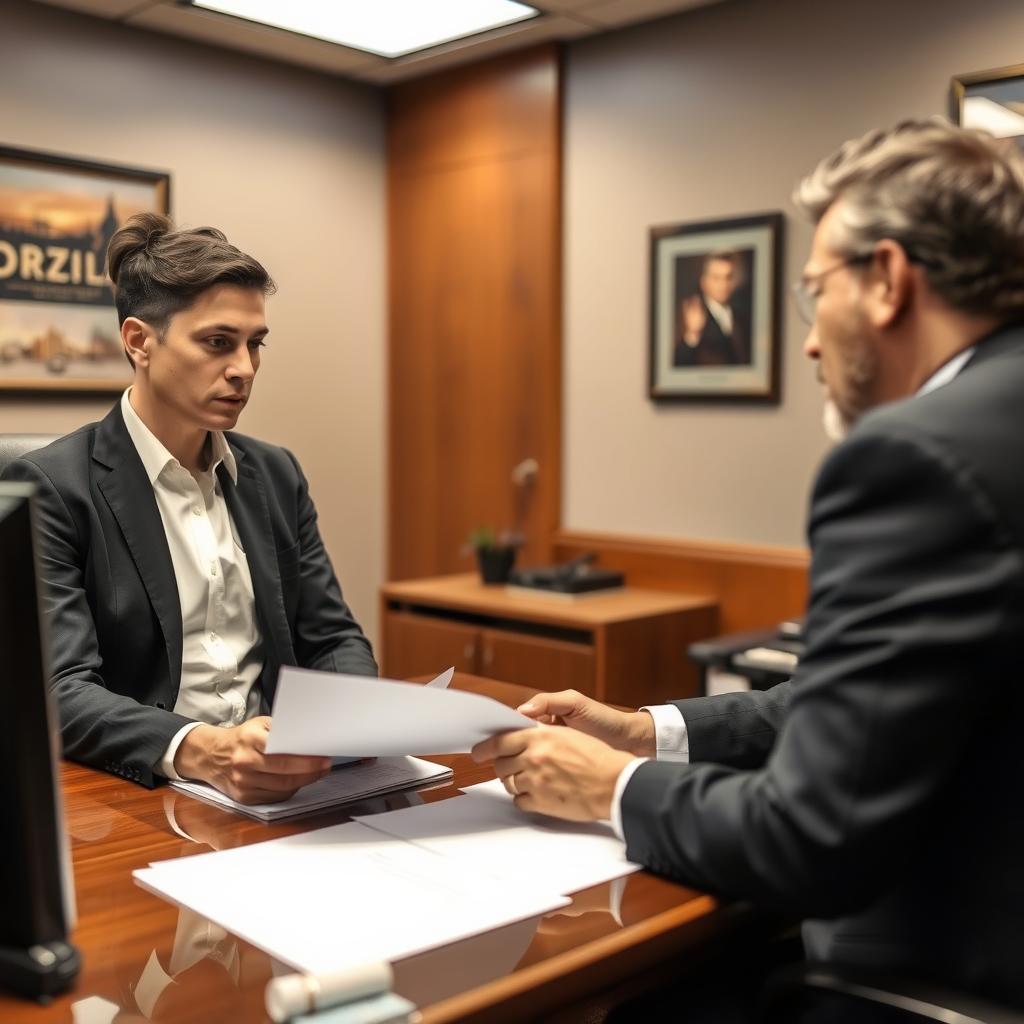
What happens at a criminal arraignment in Columbia Heights
An arraignment is your first formal appearance before a judge after being arrested or charged with a crime in the District of Columbia. At that hearing, the judge will inform you of the charges, ask how you plead, and address release conditions. For anyone who has been arrested and taken to D.C. Superior Court, understanding what an arraignment is and why legal representation matters early helps you make informed decisions. Mr. Sris and his Of Counsel regularly appear at the D.C. Superior Court Criminal Division and can explain the process to you. If you or a family member has been arrested, reach Law Offices Of SRIS, P.C. at (888) 437-7747 to discuss your circumstances. Law Offices Of SRIS, P.C. – Advocacy Without Borders.
Understanding the arraignment process in Columbia Heights and D.C. Superior Court
The criminal arraignment in Washington, D.C., takes place at the D.C. Superior Court, located at 500 Indiana Avenue NW, just a few miles from Columbia Heights. Because D.C. Operates a unique federal-local hybrid system, the U.S. Attorney’s Office prosecutes most crimes, and the court follows procedures that differ from those in Virginia or Maryland. For misdemeanors, the arraignment typically occurs within 24 hours of arrest; for felonies, a preliminary hearing and grand jury indictment may precede the formal arraignment. At the hearing, the judge reads the charges aloud, ensures you understand them, and asks you to enter a plea of guilty, not guilty, or, in some situations, nolo contendere. The judge also addresses release: unlike many jurisdictions, D.C. Does not rely on a cash-bail system. Instead, the Pretrial Services Agency conducts a risk assessment and makes a release recommendation. The judge then orders release on personal recognizance, with conditions such as stay-away orders or electronic monitoring, or, if release is opposed, may order detention. Having experienced defense counsel at this stage is critical because the plea and release determination can affect everything that follows. Mr. Sris and his Of Counsel work to protect your rights from that very first hearing.
After the arraignment, the case moves toward the next court dates. Misdemeanor trials in D.C. Superior Court are typically scheduled within 2 to 4 months, while felony cases may extend 6 to 12 months or longer, depending on discovery, motion practice, and the court’s calendar. Throughout this timeline, Law Offices Of SRIS, P.C. can evaluate the evidence, negotiate with prosecutors, and build a defense aimed at achieving the most favorable outcome possible. If you are facing an arraignment in Columbia Heights or anywhere in the District, call (888) 437-7747. We will walk you through what to expect and how to prepare.
Frequently Asked Questions
What exactly is an arraignment?
An arraignment is a formal court hearing where a defendant is told of the criminal charges filed against them and asked to enter a plea. In D.C. Superior Court, the process includes confirming the defendant’s identity, advising of the right to an attorney, reading the charges, and taking the plea. It is the first time a judge becomes involved in the case. Whether the charge is a misdemeanor or felony, this hearing sets the stage for bail or release conditions, appointment of counsel if you cannot afford a private attorney, and future court dates. Having a lawyer present helps you understand the charges and the consequences of your plea.
Where do arraignments take place for someone arrested in Columbia Heights?
All criminal arraignments for arrests occurring in Columbia Heights or anywhere else in the District of Columbia are held at the D.C. Superior Court, Criminal Division, at 500 Indiana Avenue NW. The courthouse is near Judiciary Square Metro Station on the Red Line, about a 10-minute drive from Columbia Heights. After an arrest, the defendant is transported to the D.C. Central Cellblock or local police district; the initial presentment and arraignment typically follow within 24 hours. Mr. Sris and his Of Counsel are available to appear at that courthouse on your behalf and can be reached at (888) 437-7747.
What happens if I plead not guilty at arraignment?
A not-guilty plea sets your case on the path to trial. After you enter the plea, the judge will set a status hearing or pretrial conference date. The prosecution must then provide discovery—police reports, witness statements, forensic evidence. Your defense attorney will review that evidence, file any pretrial motions, and assess whether a plea offer makes sense. In D.C., a not-guilty plea preserves all of your rights and does not mean you are closing the door to negotiation; many cases resolve through plea discussions long after arraignment. It is important to understand that a plea entered at arraignment is not final; you can later change it with the court’s permission.
Do I need a lawyer at my arraignment?
You are not required to have a lawyer, but it is strongly advisable to retain one or have one appointed before you enter a plea. The Public Defender Service for the District of Columbia provides counsel for people who cannot afford an attorney, but if you plan to hire private counsel, you should do so before the arraignment. A lawyer can argue for your pretrial release, challenge the government’s detention request, and advise you on the proper plea. Law Offices Of SRIS, P.C. represents individuals at arraignments and throughout criminal proceedings. Call (888) 437-7747 to speak with us about your situation before your hearing.
How is bail or release decided at a D.C. Arraignment?
D.C. Does not use the traditional cash-bail model for most offenses; instead, the Pretrial Services Agency (PSA) evaluates each defendant and makes a release recommendation to the judge. PSA considers factors such as ties to the community, employment, prior criminal record, and the nature of the charged offense. Based on that recommendation and arguments by the prosecutor and defense counsel, the judge may release you on personal recognizance, impose non-financial conditions like check-ins or a stay-away order, or, in serious cases, order you held without bond pending trial. Having an attorney who knows the local court practices can make a substantial difference in the release decision.
What should I bring or know before my arraignment?
If you have retained private counsel, your attorney will guide you, but it helps to gather basic information: your full legal name, date of birth, any bail receipt or citation paperwork from the police, and a list of your current contact information and address. If you plan to request a public defender, be prepared with proof of income or financial status. Dress neatly and arrive early. The most important step is to reach out to an attorney beforehand; Law Offices Of SRIS, P.C. can be contacted at (888) 437-7747. We will advise you on what to expect and how to present yourself at the hearing.
Can charges be dropped at the arraignment?
Charges are rarely dismissed at the arraignment itself. That hearing is primarily for the entry of a plea and the setting of release conditions. However, in limited circumstances—such as when the prosecution realizes it has insufficient evidence or the wrong person was charged—the government may move to dismiss. More commonly, dismissal or reduction of charges happens later, after your attorney negotiates with the prosecutor or files motions to suppress evidence. The arraignment is the starting point, and an experienced defense team will immediately begin working toward the trusted resolution possible.
What happens after the arraignment?
After the arraignment, your case proceeds to the pretrial phase. For a misdemeanor, the court will set a status hearing or trial date typically within 2 to 4 months. For a felony, the next step may be a preliminary hearing or, if the case is indicted, a second arraignment in the felony branch followed by status conferences and motions hearings. Your attorney will request discovery, investigate the facts, and evaluate any plea offers from the U.S. Attorney’s Office. Throughout this period, you must comply with all release conditions. Contact Law Offices Of SRIS, P.C. to learn how we handle each stage of a D.C. Criminal case.
How do I find a criminal defense lawyer near Columbia Heights?
You can start by calling (888) 437-7747 to speak with Law Offices Of SRIS, P.C. Our firm serves clients throughout the District of Columbia, including Columbia Heights, and our Arlington location is a short drive from the courthouse. Mr. Sris, a former prosecutor, founded the firm in 1997 and, together with his Of Counsel team, handles criminal matters in D.C. Superior Court. We can arrange a consultation promptly, explain what an arraignment involves for your specific charge, and appear with you at the hearing. Reach us to discuss your case.
What is the difference between a misdemeanor and felony arraignment in D.C.?
The core process is similar, but a felony arraignment often involves additional procedural steps such as a preliminary hearing or grand jury indictment before the formal plea is entered. For a misdemeanor, the defendant is typically arraigned within a day of arrest and enters a plea directly at that hearing. For a felony, after an initial presentment, the court may schedule a preliminary hearing to determine probable cause; if the case is indicted by a grand jury, the defendant is later arraigned on the indictment. Felony cases also carry more serious potential penalties, making legal representation at the earliest stage even more critical.
Does the court provide an interpreter if I need one?
Yes, the D.C. Superior Court provides interpreter services at no cost for defendants and witnesses who have limited English proficiency or are deaf or hard of hearing. If you require an interpreter for your arraignment, you should notify the court as soon as possible so one can be arranged. Your attorney can assist with that request. Law Offices Of SRIS, P.C. has staff members who speak Spanish, and Mr. Sris speaks Tamil, which can be helpful in initial communications. Contact us at (888) 437-7747 for more information.
About Mr. Sris and his Of Counsel team
Mr. Sris is a former prosecutor and the Owner and Founder of Law Offices Of SRIS, P.C. He established the firm in 1997 and is admitted to practice in Virginia, Maryland, the District of Columbia, New Jersey, and New York. Mr. Sris has testified before the Virginia House Courts of Justice Committee in support of 2019 HB 635 (chief patron Del. David Bulova). Together with his Of Counsel, who include attorneys with extensive experience in the D.C. Superior Court, he brings over 120 years of combined legal experience and 4,739+ documented firm-wide results to every criminal matter. Results may vary. For an arraignment in Columbia Heights or any D.C. Criminal charge, call (888) 437-7747 to request a consultation. Our Arlington location at 1655 Fort Myer Dr, Suite 700, Room 719, Arlington, VA 22209, serves clients across the District by appointment.
Additional resources: Washington, D.C. Criminal defense • Georgetown criminal lawyer • Spring Valley criminal lawyer • Cleveland Park criminal lawyer
Attorney advertising. Prior results do not guarantee a similar outcome.
Case results depend on a variety of factors unique to each case.